Wildlife monitoring
You cannot protect what you do not know.
You cannot protect what you do not know. Researchers and park managers need data on presence, movement and population trends, but the areas where those questions matter most have little or no infrastructure.
Almost every management decision rests on the answer to a few simple-sounding questions. Which species are here. How many. Are they moving differently than last year. Is something turning up that does not belong here. Where does the patrol go, where does the road get built, which area deserves protection. Without that data it is guesswork, and in exactly the places where it matters most there is no power, no network and often no road.
One of those questions runs on its own clock: invasive species management. A species entering an area can still be stopped early on. While it is a handful of animals in a handful of places, removal is feasible and affordable. Once a population establishes itself, the question turns from removal into management, year after year, with the species that were already there paying for it. But that first window is exactly when a species is hardest to see: few animals, spread across a large area, often active only at night.
Camera traps have been the workhorse there for decades, and rightly so: they are affordable, they are reliable, and they produce images from places nobody ever goes. The catch is that the data stays on the device. Someone has to travel out, sometimes for days, to swap memory cards and replace batteries. If a camera gets damaged or disappears, everything it saw since the last visit goes with it.
That costs two things. Time, because images read weeks later can no longer be a reason to act. And quiet, because every visit is disturbance. During denning season a single walk past a wolf den can be enough to make a family move on. And whoever finally reads the cards is left with tens of thousands of frames, most of them moving leaves or a passing deer.
What we built for it
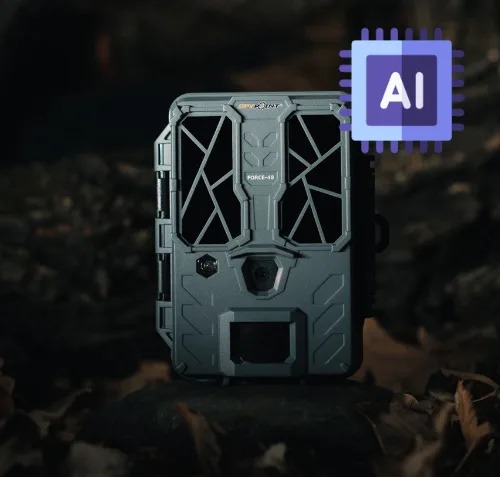
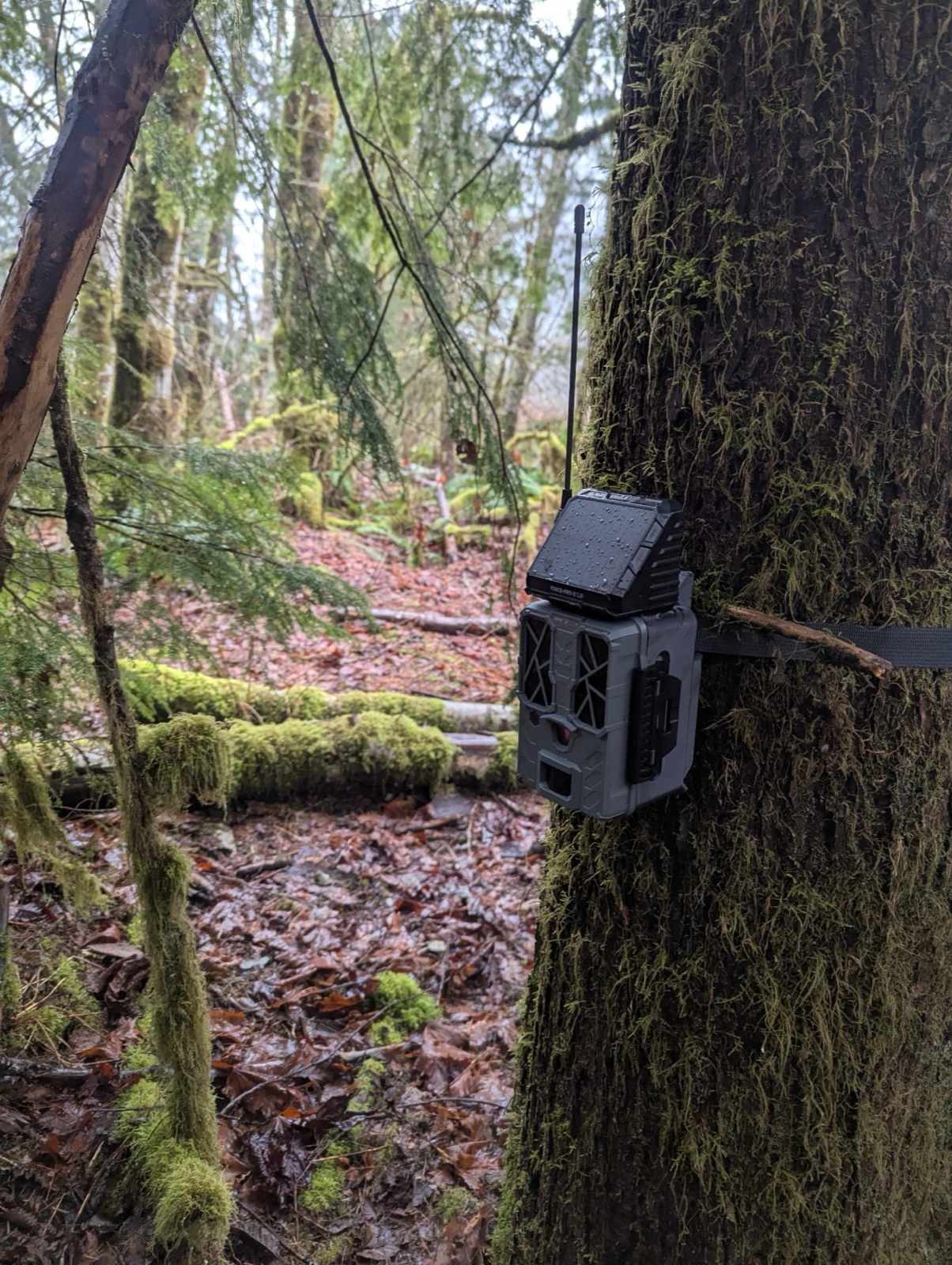
Instant Detect recognises animals and people with AI on the device itself and forwards only the relevant images immediately, over satellite or 4G. No more swapping memory cards, and with solar panels a camera keeps running through a whole season.
Because the classification happens on the camera, the link stays usable and the inbox stays readable. Detections land in the platforms the teams already work in, so the data ends up in their own analysis rather than in a separate system of ours.
And because nobody has to go in to collect data, you can follow exactly the most sensitive places without disturbing them: wolf families through denning season, without a single footstep near the den.
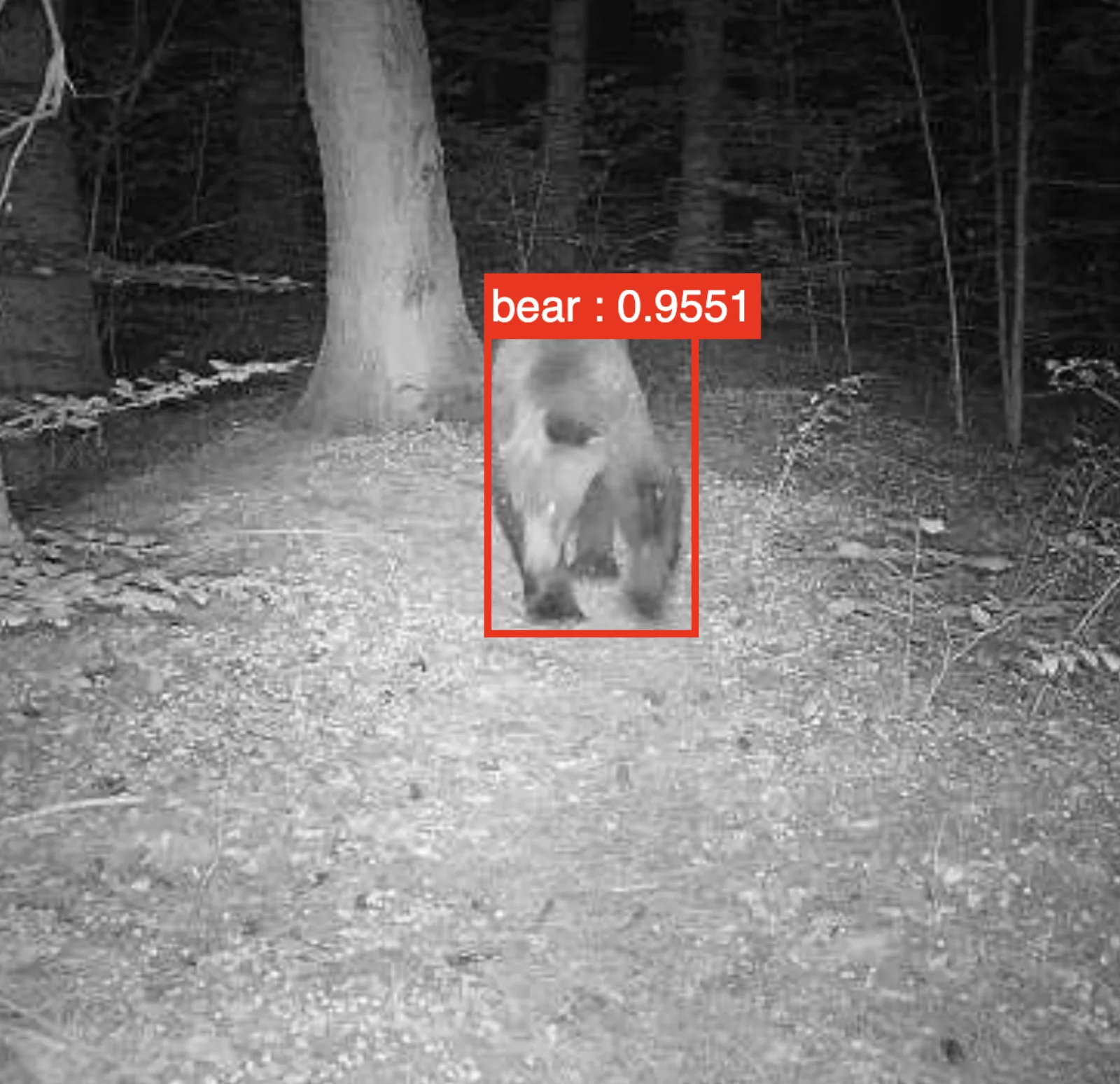
For invasive species management the real-time side counts for more here than anywhere else we work. The cameras tell species apart on the device itself and send a sighting straight on over satellite or 4G, with image, location and timestamp attached. A network can sit permanently on the routes a species uses to enter an area, and the first sighting reaches the team that has to respond the same day, while it is still a few animals.
Afterwards those same cameras stay put and show whether a species is really gone or coming back, without anyone having to go into the area every month to find out.
Where it runs today
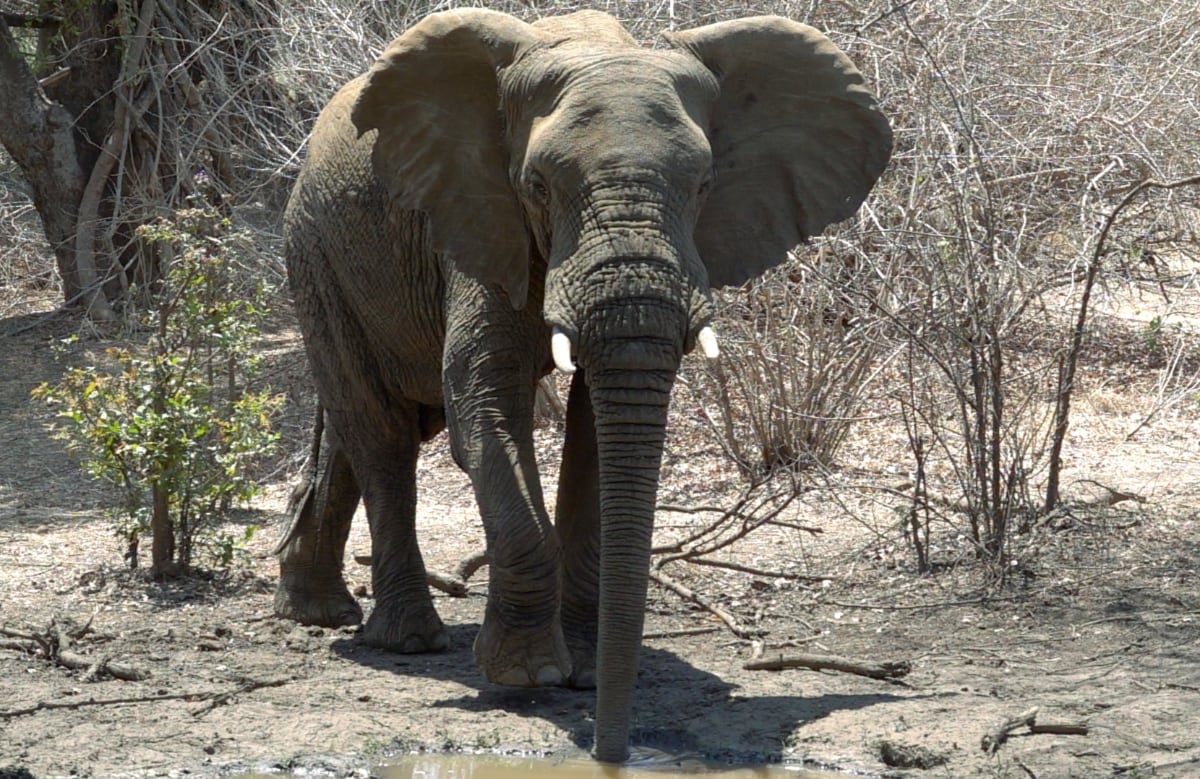
Forest elephants in Gabon, brown bears in Romania and wolves near Vancouver.
Who we do it with
Research institutes, park authorities, Indigenous nations and platform partners who use the data that management decisions rest on.

Agence Nationale des Parcs Nationaux
Gabon's national parks authority. We deploy AI camera traps and acoustic monitoring across their rainforest network in close collaboration with their teams.
Visit website →
FortisBC
Canadian energy utility. They sponsor biodiversity-monitoring work in their operating areas, where we deploy hardware alongside Zoetica and the Tsleil-Waututh Nation.
Visit website →
Sensing Clues
Dutch foundation building a wildlife-intelligence platform that helps rangers and researchers turn field signals into actionable insight. Our 4G camera detections feed straight into their platform on our real-time bear-monitoring deployment in Romania.
Visit website →
Tsleil-Waututh Nation
Indigenous Nation in British Columbia leading stewardship across their territory. We work with them on biodiversity-monitoring technology in the Salish Sea region.
Visit website →
University of Stirling
Scottish research university with strong programmes in environmental science and ecology. We collaborate on research that helps turn our field deployments into peer-reviewed knowledge.
Visit website →
WWF Romania
The Romanian office of WWF, working on the Carpathians and the Danube. We monitor brown bears with them in real time, so their researchers know which species turned up where within seconds instead of at the end of a field season.
Visit website →
Zoetica Environmental
Biodiversity consultancy specialising in cumulative-effects monitoring. They bring the scientific rigour to the deployments we run together in western Canada.
Visit website →The other conservation themes
Missing data from an area with no network?
Tell us which species, which question and which area. Then we will look at whether cameras with AI on board can deliver the data you need.